About PSEP
The safety of our customers, our employees and the communities we serve has been and will always be our highest priority. To that end, the Pipeline Safety Enhancement Plan (PSEP) was established to promote the continued safety and integrity of our natural gas transmission pipelines.
Objectives
PSEP encompasses the following four objectives:
- Enhance public safety
- Comply with the Commission's directives
- Minimize customer impacts
- Maximize cost effectiveness
How PSEP Works
PSEP identifies various pipeline sections throughout our system without a record of a pressure test and slates them to be pressure-tested or replaced. We notify customers and the public when pressure testing or replacement activity is coming to their neighborhood.
PSEP includes provisions to upgrade, replace or retrofit hundreds of mainline valves in the system with technology that allows them to be opened or closed remotely by system operators from a central control location, or that automatically shuts off the flow of natural gas in the event of a large pressure drop.
How PSEP was Created
In 2011, the California Public Utilities Commission (CPUC) ordered all natural gas transmission operators in the State of California to develop an Implementation Plan to achieve the goal of orderly and cost-effectively testing or replacing all natural gas transmission pipelines in their system that have not been pressure-tested.
We wholeheartedly supported this extra safety measure, and submitted the proposed plan to implement the directives of the Commission. PSEP was approved in June 2014.
Meeting the Challenge
While we're proud of our safety and reliability achievements, and we continue to challenge ourselves to be even more diligent in maintaining the overall safety of our pipeline system and infrastructure. We know that all customers will benefit from the added testing and safety validation of our transmission system.
PSEP Processes
In 2011, the California Public Utilities Commission (CPUC) ordered all natural gas transmission operators in the State of California to develop an Implementation Plan to achieve the goal of orderly and cost-effectively testing or replacing all natural gas transmission pipelines in their system that have not been pressure-tested. As a result, the Pipeline Safety Enhancement Plan (PSEP) was established to promote the continued safety and integrity of our natural gas transmission pipelines.
PSEP identifies pipeline sections throughout our system without a record of a pressure test and slates them to be pressure-tested or replaced. We notify customers and the public when pressure testing or replacement activity is coming to their neighborhood.
Hydrostatic Pressure Testing
One of the common methods of assessing pipeline integrity is the hydrostatic pressure test. Hydrostatic pressure testing is a process that uses water to exert pressure on a pipeline at levels much greater than its usual operating pressure.
Pipeline Replacement
Sometimes natural gas pipelines need to be replaced to meet expanding customer and/or natural gas system needs as well as to accommodate infrastructure improvement projects of cities, counties and state agencies.
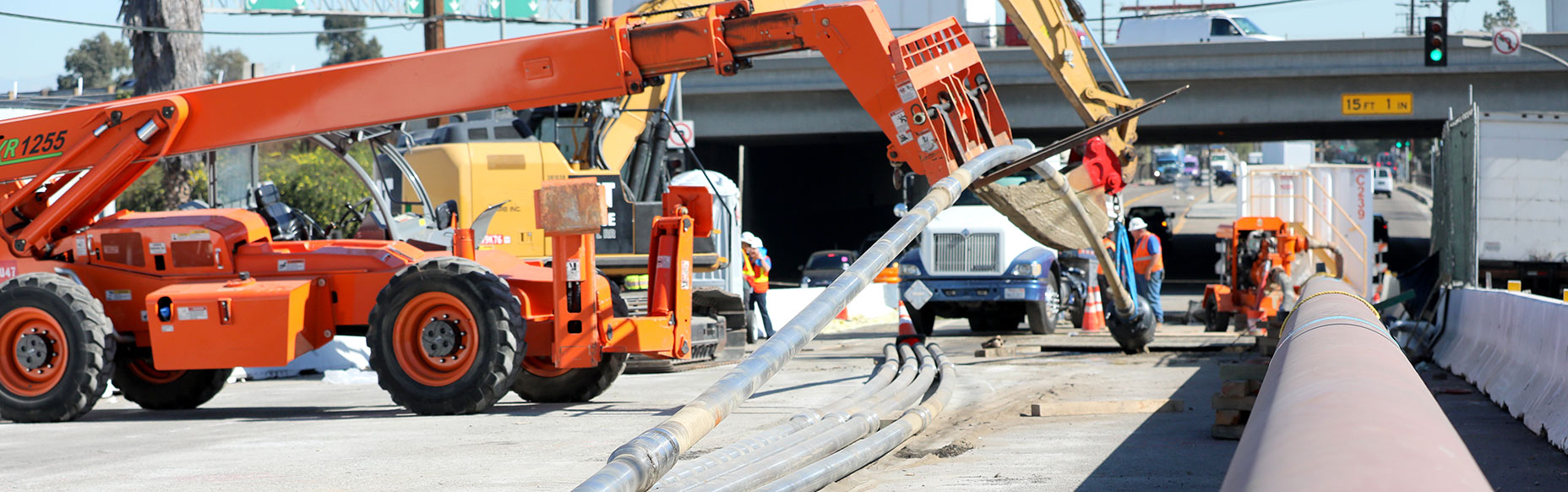
A pipeline replacement project can be a significant construction operation. Typically, the new pipeline segment is installed adjacent to the existing pipeline, which allows the construction work to proceed without stopping the flow of natural gas through the original pipeline.
Valve Upgrade and Replacement
Pipeline valves are one of the key safety components involved in the testing, maintenance and everyday operational activities of our natural gas pipeline. Valves are mechanical devices that control the flow of natural gas through our pipelines.